


Tech startups often claim that regulation restrains innovation. Regulatory sandboxes challenge that assumption. Many founders now deliberately pursue these programmes, recognising that controlled regulatory environments provide credibility, investor confidence, and legal clarity during early development. This newsletter examines how sandboxes function as strategic tools within technology markets and why regulators are permitting experimentation inside formal supervisory frameworks.

Newsletter Edition 93
Why Regulatory Sandboxes Are Becoming Strategic Tools for Early Stage Tech Startups
Regulation is not the enemy of early-stage technology companies. Regulation is a legal framework. Smart founders understand this earlier than most lawyers.
Startups often describe regulation as a barrier to entry. Venture capitalists regularly frame compliance as a cost. Public debate frequently portrays regulation as an obstacle to innovation. That story feels intuitive, but it is also incomplete.
Regulatory sandboxes demonstrate something different. They show that regulation can operate as a strategic asset when a company understands how to use it.
Early-stage companies increasingly treat regulatory sandboxes as part of their growth strategy. This practice now appears across fintech, artificial intelligence, digital identity systems, blockchain infrastructure, digital health platforms, and climate technology.
Regulators introduced sandboxes to understand new technology. Startups now use them to access regulators, investors, and markets.
What a Regulatory Sandbox Actually Does
A regulatory sandbox is a controlled environment created by a regulator in which companies can test new technologies under supervision, with temporary regulatory flexibility.
The modern sandbox model emerged from the Financial Conduct Authority sandbox programme in the United Kingdom, introduced in 2016.
Participants receive permission to test products with real users under regulatory oversight. Regulators collect information about risk, consumer protection, and technical performance. Companies obtain structured engagement with regulators before entering the full regulatory cycle.
The United Kingdom sandbox operates under powers granted by the Financial Services and Markets Act 2000, which allow the regulator to grant waivers and modifications to regulatory requirements.
Other jurisdictions adopted similar frameworks.
Singapore operates a regulatory sandbox through the Monetary Authority of Singapore FinTech Regulatory Sandbox Guidelines.
Australia created a sandbox through the Corporations Act 2001 regulatory exemption framework administered by the Australian Securities and Investments Commission.
The European Union introduced an experimentation environment through the Artificial Intelligence Act regulatory sandbox provisions.
Sandboxes, therefore, represent a structured interface between innovators and regulators.
Early-stage companies discovered that this interface carries strategic value.
A Founder Secret That Lawyers Rarely Discuss
Technology founders often reveal something privately that rarely appears in policy reports.
Access to regulators accelerates a company.
Early-stage companies usually face three obstacles simultaneously.
Legal uncertainty
Investor scepticism
Market trust
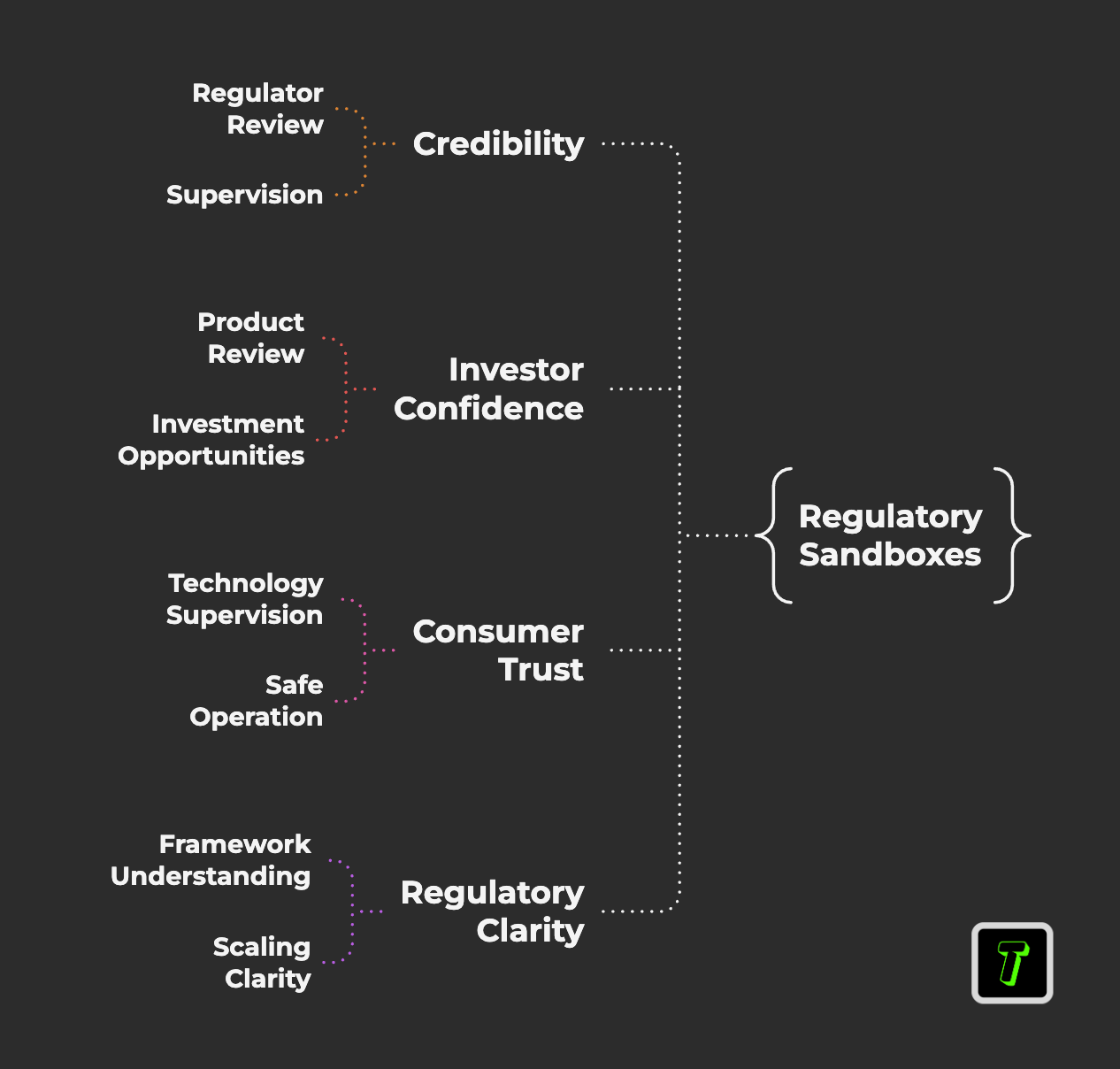
A sandbox addresses each of these challenges simultaneously.
A regulator that allows a company to operate within a sandbox provides a form of credibility that early-stage companies struggle to obtain elsewhere.
Investors understand that a regulator has reviewed the product. Consumers understand that the technology operates under supervision. The company obtains clarity about the regulatory framework before scaling.
This effect appears in empirical research.
A study published by the Bank for International Settlements found that firms admitted to regulatory sandboxes raise significantly more investment after participating in the sandboxes.
The Financial Conduct Authority’s sandbox evaluation report found that approximately 80% of sandbox participants continued to operate successfully after completing testing.
Numbers alone do not tell the full story. A closer look at how founders actually use sandboxes reveals something more interesting.
The Sandbox Strategy
Some startup founders treat sandbox admission as a milestone similar to product launch.
A four-step pattern has begun to appear in several technology sectors.
A company builds a prototype.
The company enters a regulatory sandbox.
The company tests the product under supervision.
Investors enter the picture.
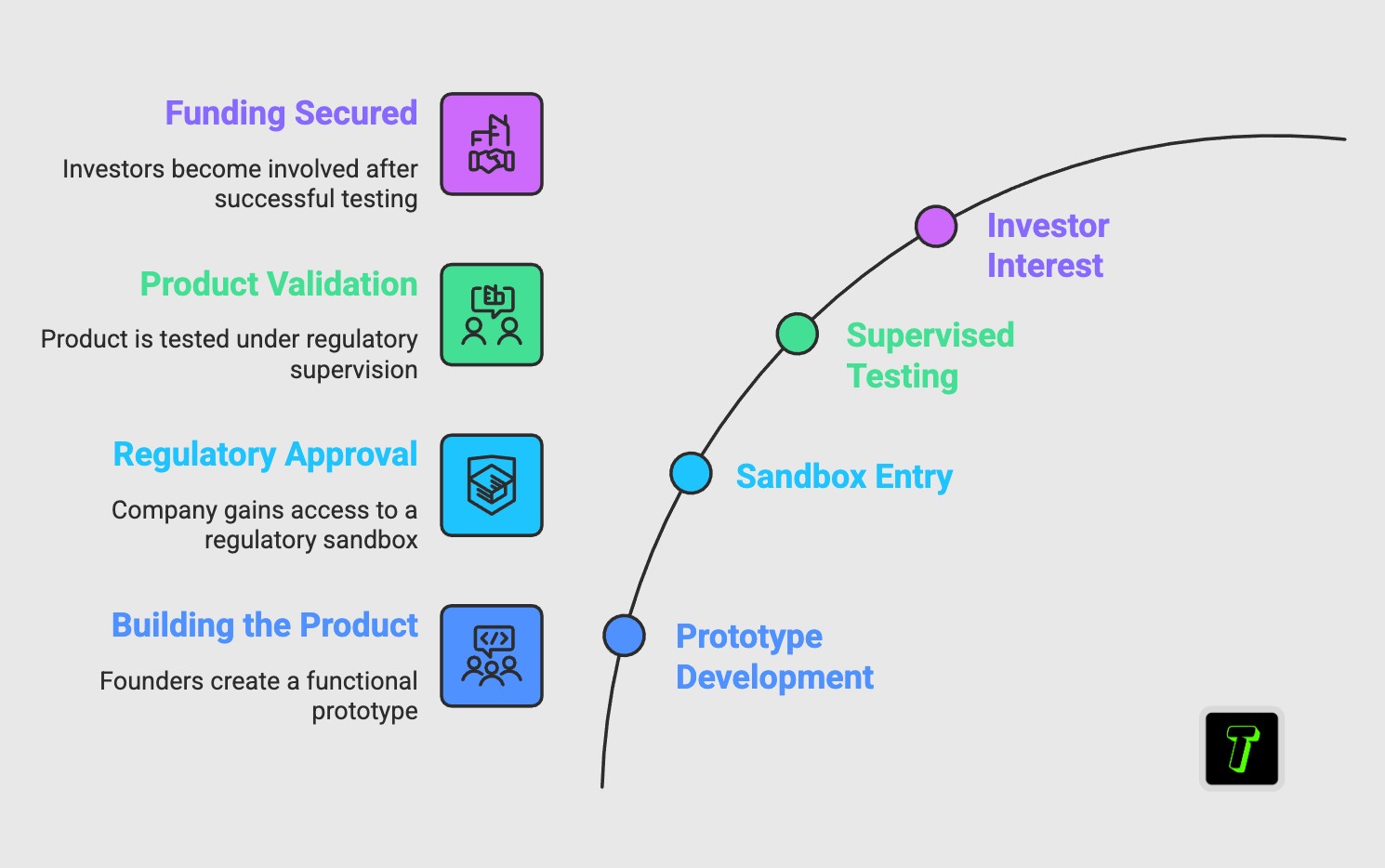
This sequence increasingly appears in fintech ecosystems.
The Global Financial Innovation Network, a coalition of regulators across more than 70 jurisdictions, was created partly to enable cross-border sandbox testing.
Regulatory experimentation now occurs in sectors that previously had little direct interaction with regulators during early development stages.
Artificial intelligence developers test algorithmic decision systems in sandbox environments established under the European Union Digital Finance Package and AI regulatory experimentation frameworks.
Digital health platforms collaborate with health regulators through regulatory test environments in several jurisdictions.
Blockchain infrastructure companies interact with financial regulators earlier in product development.
This practice disrupts the traditional innovation sequence. Legal engagement now occurs during product design rather than after market launch.
A Snapshot of Global Sandbox Activity
The number of regulatory sandboxes has increased significantly during the past decade.
The following table provides an approximate snapshot of sandbox programmes worldwide, based on data compiled from reports by the World Bank, the OECD, and the Cambridge Centre for Alternative Finance.
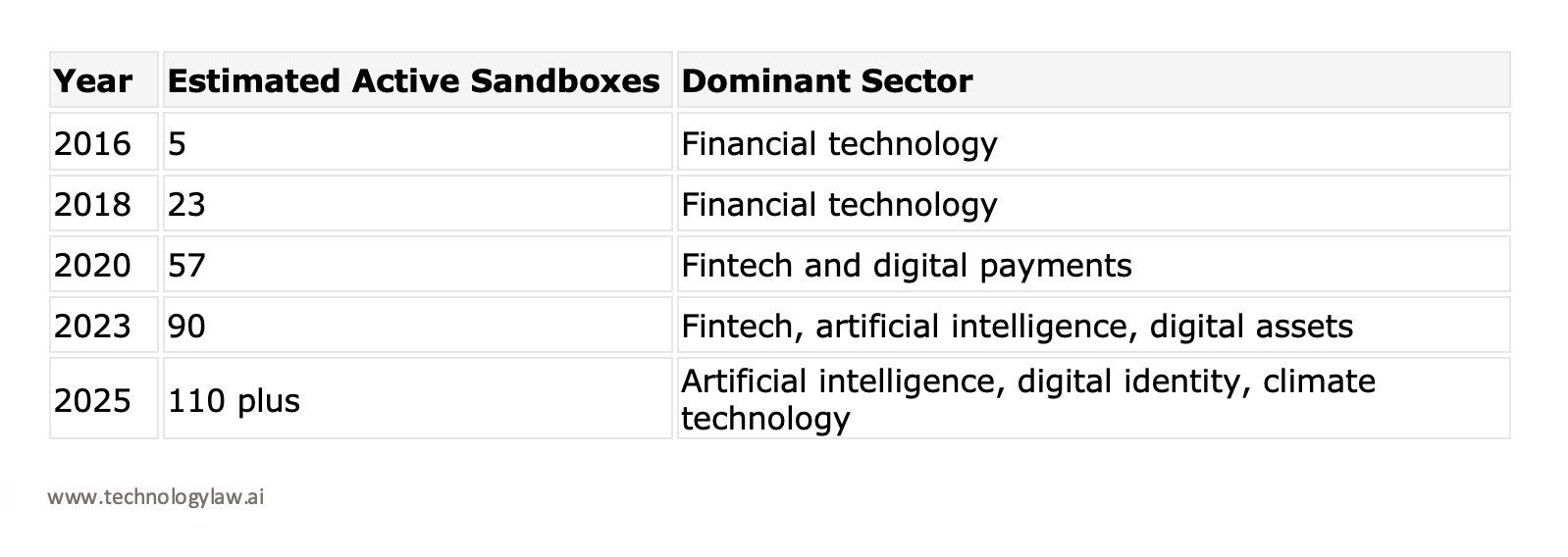
This increase reflects demand from startups. Founders increasingly recognise that regulatory engagement can reduce the uncertainty that would otherwise delay investment and adoption.
Courts are Beginning to Notice
Courts rarely discuss regulatory sandboxes directly because sandboxes operate within regulatory supervision rather than litigation.
Judicial decisions nevertheless demonstrate how regulatory experimentation affects legal reasoning.
A well-known example arises in the litigation surrounding cryptocurrency exchanges and digital asset regulation.
The case SEC v Ripple Labs Inc, pending in the United States District Court for the Southern District of New York, illustrates how uncertainty regarding digital asset classification affects technology development and market entry.
A sandbox environment allows regulators and innovators to explore regulatory treatment before disputes escalate into litigation.
European policymakers have explicitly acknowledged this function in the European Commission's Artificial Intelligence Act impact assessment, which identifies sandboxes as tools that enable regulators to understand algorithmic systems before enforcement actions are taken.
Lawyers sometimes treat litigation as a mechanism that clarifies the law. Sandboxes represent another mechanism that achieves similar clarity through experimentation.
Is there a serious risk of overregulation of tech in the EU?

A Simple Model That Explains the Sandbox Advantage
A simple framework helps explain why founders pursue sandbox admission.
Consider three factors that determine whether a technology startup succeeds in a regulated industry.
Regulatory clarity
Market trust
Access to capital
Normal innovation paths produce these factors slowly and unpredictably. Sandbox participation produces them simultaneously. The following simplified chart illustrates the difference.
Startup Development Without a Sandbox
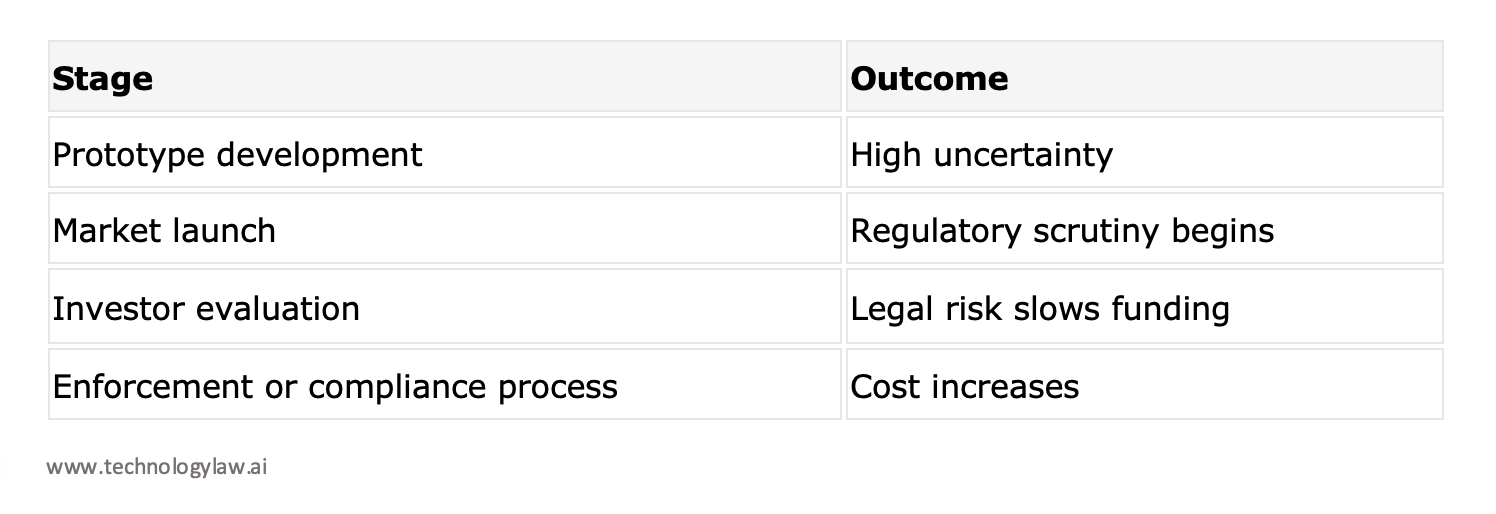
Startup Development With Sandbox Participation
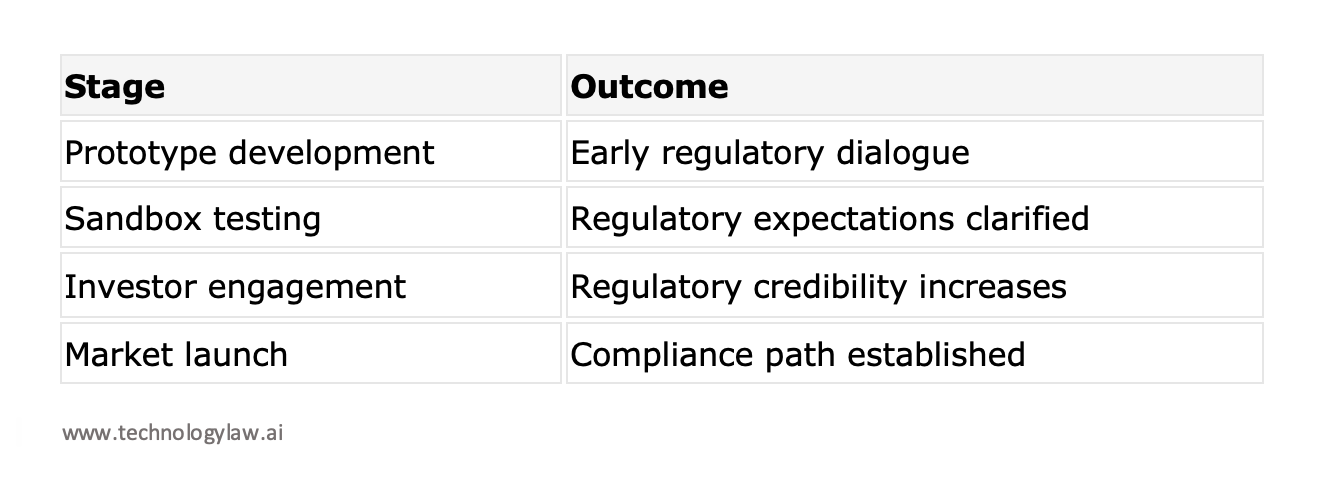
As shown in an AI regulatory study, investors frequently treat sandbox admission as evidence that regulatory engagement has begun.
The advantage becomes clear when capital enters the conversation.
Why Investors Should Care
Investors rarely discuss regulatory sandboxes publicly. Private investment conversations tell a different story.
Early-stage investors often interpret sandbox admission as an indicator that the company has begun to resolve regulatory uncertainty.
A venture capital firm evaluating a fintech startup often confronts a fundamental question. Is this technology legal to operate at scale?
A sandbox does not answer every regulatory question, but it demonstrates that regulators are already engaged with the technology.
Empirical data support this observation.
A report from the International Monetary Fund's FinTech Notes Series shows that companies participating in regulatory sandboxes frequently secure additional financing after testing phases conclude.
Why Regulators Accept This Arrangement
Critics sometimes argue that regulatory sandboxes benefit startups more than regulators.
Regulators have strong incentives to participate.
Technological innovation introduces risks that regulators cannot fully understand without observing real-world deployment.
Artificial intelligence systems may influence lending decisions, insurance pricing, or medical diagnoses. Blockchain systems may facilitate financial transactions that fall outside existing regulatory categories.
A regulator attempting to supervise these technologies without direct observation operates with incomplete information.
Sandbox programmes allow regulators to observe the behaviour of technology under controlled conditions.
The Organisation for Economic Cooperation and Development report on regulatory sandboxes emphasises that regulators obtain valuable data regarding consumer risk, operational reliability, and compliance challenges during sandbox experiments.
Sandboxes, therefore, function as regulatory research laboratories.
The New Geography of Innovation
Another emerging development deserves attention.
Regulatory sandboxes can influence where startups decide to establish headquarters.
Jurisdictions that offer credible sandbox programmes attract technology founders.
Singapore offers a well-known example. The Monetary Authority of Singapore's sandbox programme has attracted dozens of fintech companies that later expanded across Asia.
Abu Dhabi created a similar framework through the Abu Dhabi Global Market RegLab programme, designed to attract financial technology firms.
The United Arab Emirates has built a regulatory innovation ecosystem, partly based on sandbox experimentation.
Governments recognise that regulatory sandboxes can operate as an economic development tool.
A Glimpse Into the Numbers
The following simplified dataset illustrates a pattern observed across several sandbox programmes based on publicly available reports from regulators and international organisations.
Sandbox Outcomes Observed Across Multiple Jurisdictions
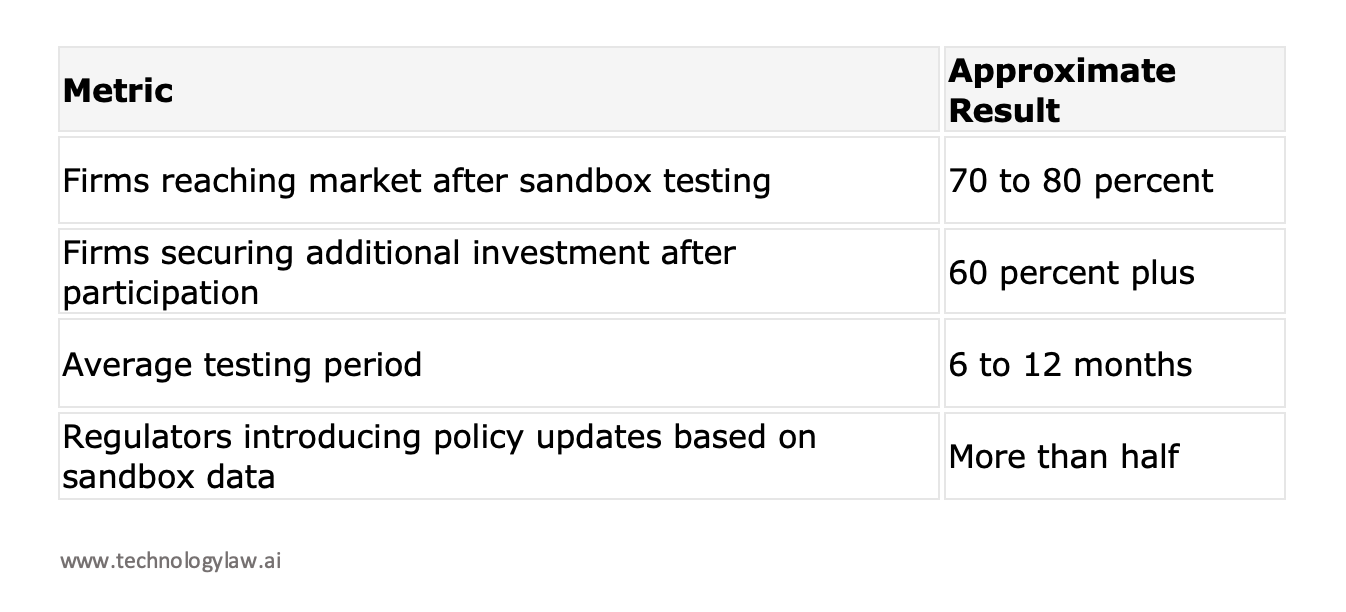
Numbers rarely capture the cultural impact of this development. Sandboxes have changed how founders and regulators interact.
The Future Role of Sandboxes
Several policy reports anticipate that sandbox frameworks will expand into additional sectors.
Artificial intelligence governance provides a prominent example.
The European Union Artificial Intelligence Act explicitly encourages member states to establish regulatory sandboxes that allow developers to test high-risk AI systems under supervision.
For example:
Climate technology companies developing carbon accounting platforms or environmental data systems may interact with regulators through sandbox environments.
Digital identity infrastructure and privacy-enhancing technologies present similar opportunities.
Innovation occurs in domains where law and technology intersect.
Regulatory sandboxes provide a structured space where that intersection becomes visible.
////////////////////END/////////////////
This newsletter is provided for informational and educational purposes only. It does not constitute legal advice, and readers should not rely on it as a substitute for professional legal counsel. The views expressed are those of the Technology Law e-Newsletter and do not necessarily reflect the views of any affiliated institution.
Great post. Sandbox application and innovation are emerging areas within the legal profession.